
Portal
OPD OPEN TODAY (9:00 AM - 8:00 PM)
Helpline Call Now
Instant WhatsApp
Good News IVF & Fertility Centre • Patna

Blastocyst Culture & Transfer in Patna

Day-5 Extended Embryo Culture • Higher Implantation & Live Births

Home Services Blastocyst Culture & Transfer
15+ Years Experience Up to 85% Success Rate ART Act 2021 Compliant 0% Interest EMI
Advanced Embryology

Why Day-5 Blastocyst Culture Maximizes Pregnancy Rates

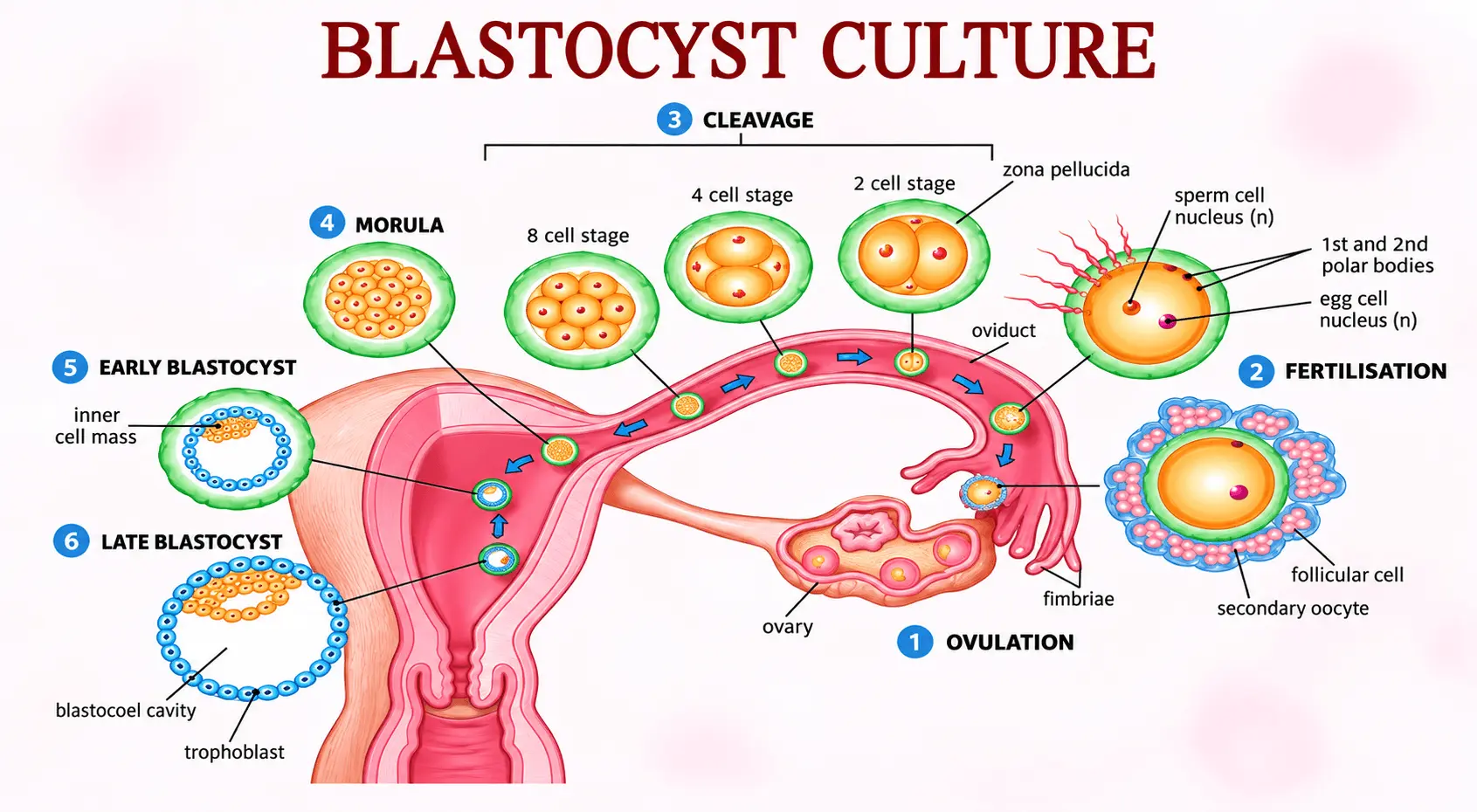
In standard IVF, embryos were traditionally transferred on Day 2 or Day 3 at the 4 to 8-cell cleavage stage. Blastocyst culture is an advanced embryology protocol where embryos are nurtured in specialized sequential culture media inside tri-gas benchtop incubators until Day 5 or Day 6, reaching the blastocyst stage (over 100 to 150 cells).

Reaching the blastocyst stage is a critical biological hurdle: only chromosomally competent embryos with strong developmental potential survive to Day 5. This natural selection allows Dr. Vandana Mishra to perform Single Embryo Transfers (eSET), eliminating twin risks while achieving peak pregnancy success.
  • Natural biological selection filtering out genetically weaker embryos
  • 2 to 3 times higher implantation rate per embryo compared to Day-3 transfers
  • Enables safe Single Embryo Transfer (eSET) preventing high-risk twin pregnancies
  • Optimal stage for Preimplantation Genetic Testing (PGT-A) biopsy
Consult Dr. Vandana Mishra
Blastocyst Culture & Transfer Patna
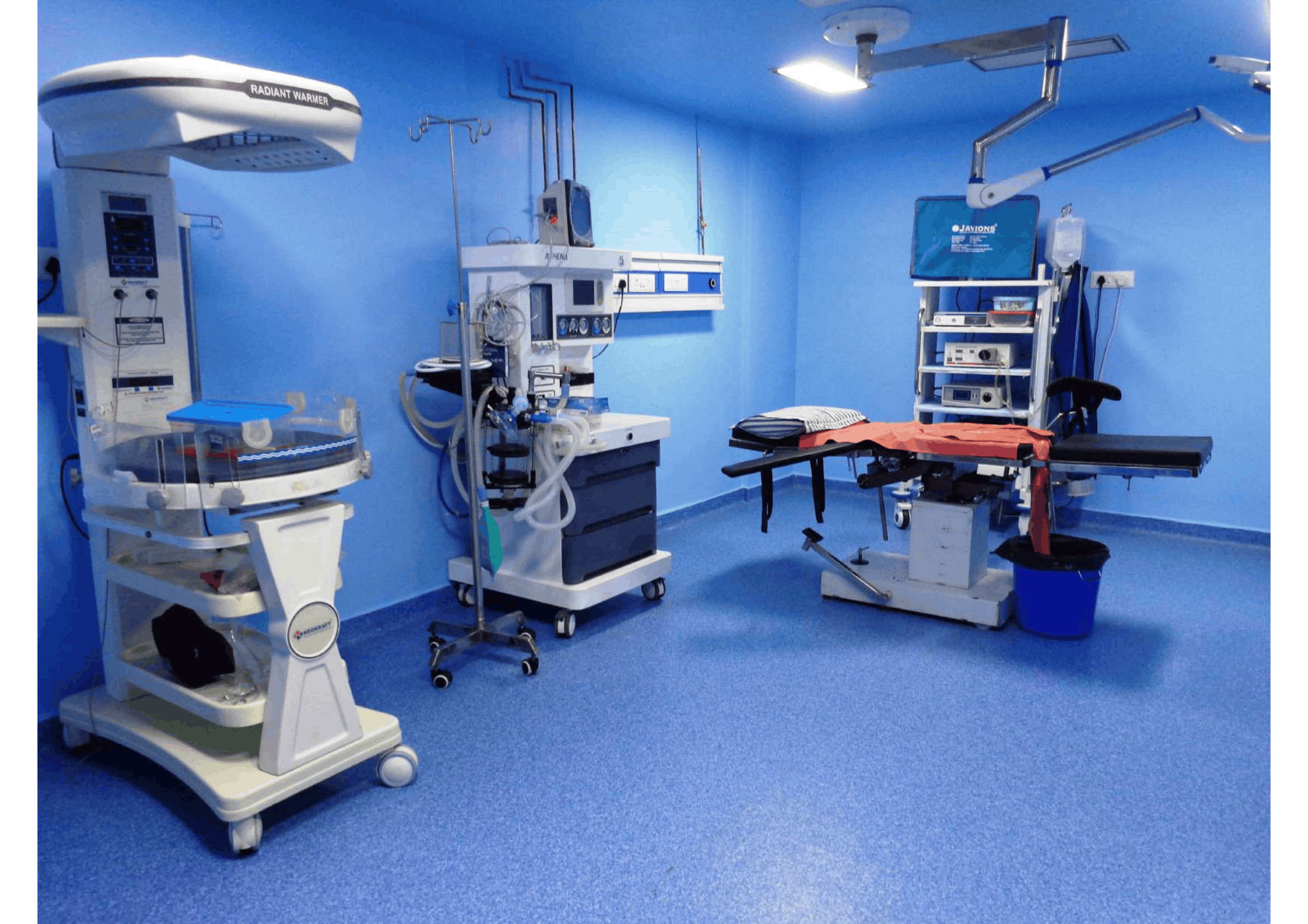
Class 10,000 Cleanroom Lab
85% Success Rate

Under 35 Benchmark

Why Choose This Care

Why Choose Good News IVF for Blastocyst Culture

World-class embryology facilities, individualized clinical protocols, and transparent ethical care right here in Patna.

Day-5 Natural Selection

Only the strongest embryos with active embryonic genomes survive to blastocyst stage.

2-3x Higher Implantation

Each top-grade blastocyst has significantly higher attachment potential than Day-3 embryos.

Single Embryo Transfer

Achieve high pregnancy rates transferring just one embryo, eliminating twin/triplet risks.

PGT-A Compatible

Trophectoderm biopsy on Day-5 does not damage the inner cell mass that forms the baby.

Benchtop MIRI Incubators

Individual incubation chambers with low physiological oxygen mimicking human fallopian tubes.

Gardner Quality Grading

Detailed scoring of Inner Cell Mass (ICM) and Trophectoderm for precise embryo selection.

Step-by-Step Protocol

The Blastocyst Culture Journey

Clear, structured milestones at every phase of your personalized fertility journey.

1

Fertilization Verification (Day 1)

Day 1

Embryologists confirm normal fertilization by checking for two pronuclei (2PN) 16-18 hours post-IVF/ICSI.

2

Cleavage Stage Check (Day 3)

Day 3

Embryos are checked for 6-8 uniform cells with minimal fragmentation and placed in fresh blastocyst media.

3

Morula Compaction Stage (Day 4)

Day 4

Cells begin to compact and fuse together, activating the embryonic genome and preparing for cavitation.

4

Blastocyst Formation (Day 5)

Day 5

Embryo expands to 100+ cells, differentiating into the Inner Cell Mass (fetus) and Trophectoderm (placenta).

5

Gardner Morphological Grading

Day 5-6

Senior embryologist grades expansion (1-6), ICM quality (A-C), and trophectoderm quality (A-C).

6

Selective Transfer or Vitrification

Day 5 / FET

The single best blastocyst is selected for transfer; surplus high-grade blastocysts are safely vitrified.
Understanding the Gardner Blastocyst Grading System
Clinical Spotlight
Embryology Science

Understanding the Gardner Blastocyst Grading System

At Good News IVF, every blastocyst is evaluated under high-resolution optics using the internationally recognized Gardner grading system. For example, a grade of "4AA" signifies a fully expanded blastocyst with an exceptional inner cell mass (future baby) and high-density trophectoderm (future placenta), carrying the highest clinical implantation odds.

  • Numbers 1 to 6: Degree of blastocoel cavity expansion and hatching
  • First Letter (A, B, C): Quality and cell compaction of the Inner Cell Mass
  • Second Letter (A, B, C): Cohesion and cell count of the outer Trophectoderm layer
  • Allows objective, data-driven selection of the single most viable embryo
Learn About Blastocyst Transfer
Clinical Insights

Day-3 Cleavage Transfer vs. Day-5 Blastocyst Transfer

Why modern fertility clinics have transitioned to Day-5 transfers

Day-3 Cleavage Transfer (6-8 Cells)

  • Embryo has only 6 to 8 cells; embryonic genome not yet fully active
  • Cannot predict which Day-3 embryos will survive to implant
  • Clinics often transfer 2 or 3 embryos to compensate, risking dangerous twin pregnancies
  • Implantation rate per embryo averages 25% to 35%
Recommended Protocol

Day-5 Blastocyst Transfer (100+ Cells)

  • Embryo has 100 to 150 differentiated cells with proven developmental strength
  • Natural selection filters out weak embryos with chromosomal arrests
  • Single Embryo Transfer (eSET) provides high pregnancy rates with zero twin risk
  • Implantation rate per blastocyst averages 55% to 70%

Storage Duration, Safety & Quality Standards

Every clinical and laboratory procedure at Good News IVF strictly complies with the ART (Regulation) Act 2021 and international embryology guidelines.

60-65%
Blastocyst Conversion
From fertilized 2PN embryos
2-3x
Higher Implantation
Compared to Day-3 cleavage embryos
100%
Tri-Gas Incubators
Physiological 5% O2 conditions
Candidacy Guide

Who Benefits Most from Blastocyst Culture?

Extended culture is ideal for almost all IVF cycles, especially:
Couples with multiple good-quality Day-3 embryos needing precise selection of the best one
Patients who experienced repeated IVF failure or implantation failure in previous Day-3 transfers
Couples planning Preimplantation Genetic Testing (PGT-A) for chromosomal screening
Young couples seeking Single Embryo Transfer (eSET) to avoid medical risks of twins
Patients pursuing elective freeze-all vitrification for future frozen embryo transfer
Blastocyst Culture & Transfer Candidates
Our Commitment

Choosing The Right Clinic in Patna

Why hundreds of families across Bihar trust Good News IVF & Fertility Centre for their parenthood dreams.

Class 10K Cleanroom Lab

Extended culture requires ultra-pure, VOC-free air quality to prevent embryo arrest on Days 4 and 5.

Benchtop MIRI Tech

Multi-chamber incubators ensure quick gas and temperature recovery, eliminating culture disruption.

Expert Embryology Team

Embryologists certified in micro-grading and blastocyst biopsy handling your precious gametes.

Safe Single Transfers

We prioritize maternal and fetal safety by promoting single blastocyst transfers with peak live births.

Dr. Vandana Mishra Fertility Specialist Patna
Verified Specialist
Clinical Director

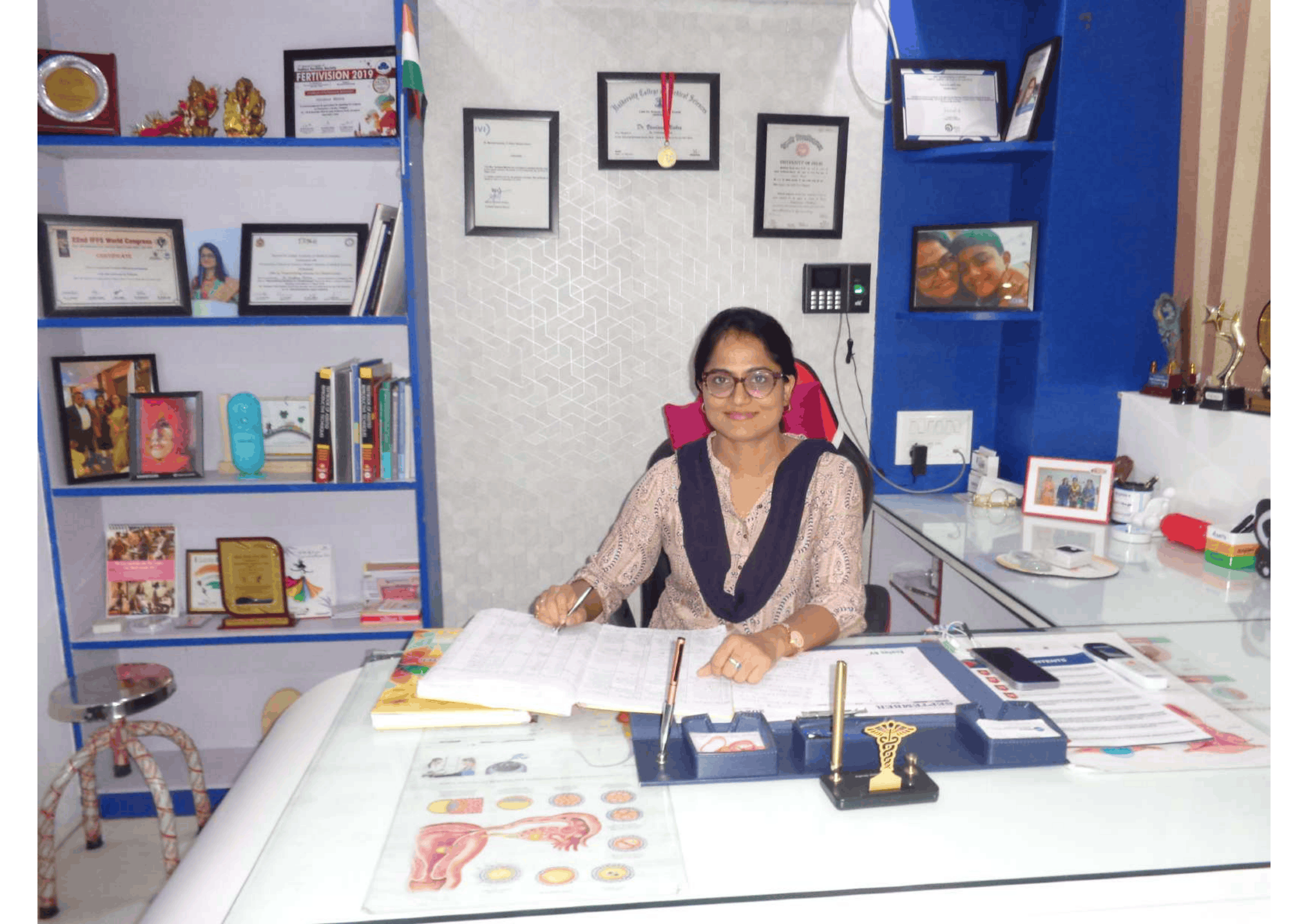
Dr. Vandana Mishra

Senior Gynecologist, Obstetrician & Reproductive Medicine Specialist
  • 15+ Years Clinical Experience: Dedicated fertility specialist with 5,000+ completed cycles.
  • Individualized Protocols: Personalized stimulation plans customized to ovarian reserve & hormone profile.
  • Professional Memberships: Active member of ISAR, ESHRE, and Indian College of Obstetricians.
  • Transparent & Ethical Care: Clear treatment advice, no unnecessary tests or hidden costs.

5,000+

Happy families and healthy babies delivered across Bihar & Eastern India.

Book Consultation

Your Parenthood Dreams Deserve Trust & Excellence

Take the first confident step toward starting your family. Schedule your private, comprehensive consultation with Dr. Vandana Mishra today.

Frequently Asked Questions

Your Questions, Answered Clearly

Clear answers regarding procedure timeline, preparation, and what to expect during Blastocyst Culture.

Do all embryos reach the blastocyst stage on Day 5?

No. On average, about 50% to 60% of viable Day-3 embryos progress to Day-5 blastocysts. This natural drop-off is normal and beneficial: it weeds out embryos that would have failed to implant or resulted in early miscarriages.

Is there a risk that no embryos reach Day 5?

In patients with very low egg reserve (1-2 eggs), an embryologist and doctor may discuss a Day-3 transfer. However, an embryo that cannot survive in our advanced MIRI incubator would rarely survive in the uterus.

Why does blastocyst transfer reduce the risk of twins?

Because blastocysts have a high implantation rate (55-70%), we can confidently transfer just ONE blastocyst (Single Embryo Transfer) and still achieve high pregnancy rates, avoiding dangerous twin complications.

Can Day-5 blastocysts be frozen safely?

Yes! In fact, Day-5 blastocysts have the highest vitrification survival rates (>95%) of any embryonic stage because their multi-cellular structure withstands the freeze-thaw process exceptionally well.
REAL PATIENT REVIEWS

Heartfelt stories of hope

4.8 / 5.0 ★★★★★ (110+ Reviews on Google)